Sustainability in Exhibition Design: Building Eco-Conscious Brand Activations
# Sustainability in Exhibition Design: Building Eco-Conscious Brand Activations
Environmental consciousness has shifted from niche concern to mainstream expectation. Modern audiences—particularly younger demographics and corporate procurement teams—actively prefer brands demonstrating genuine commitment to sustainability. Exhibition design offers a powerful platform for communicating environmental responsibility while reducing your brand's ecological footprint.
The Business Case for Sustainable Exhibitions
Sustainable exhibition design isn't just environmentally responsible—it's increasingly a business imperative. Companies prioritizing sustainability attract talent, retain customers, and command premium pricing. For B2B brands, environmental commitment influences procurement decisions. For consumer brands, sustainability messaging resonates strongly with younger audiences.
Research shows that 73% of global consumers would change their consumption habits to reduce environmental impact. This consumer preference translates into business advantage for brands demonstrating genuine sustainability commitment.
Material Selection and Circular Design
The foundation of sustainable exhibition design lies in material selection. Traditional exhibition stands often use virgin materials, single-use components, and non-recyclable elements. Sustainable design prioritizes recycled materials, reusable components, and circular design principles.
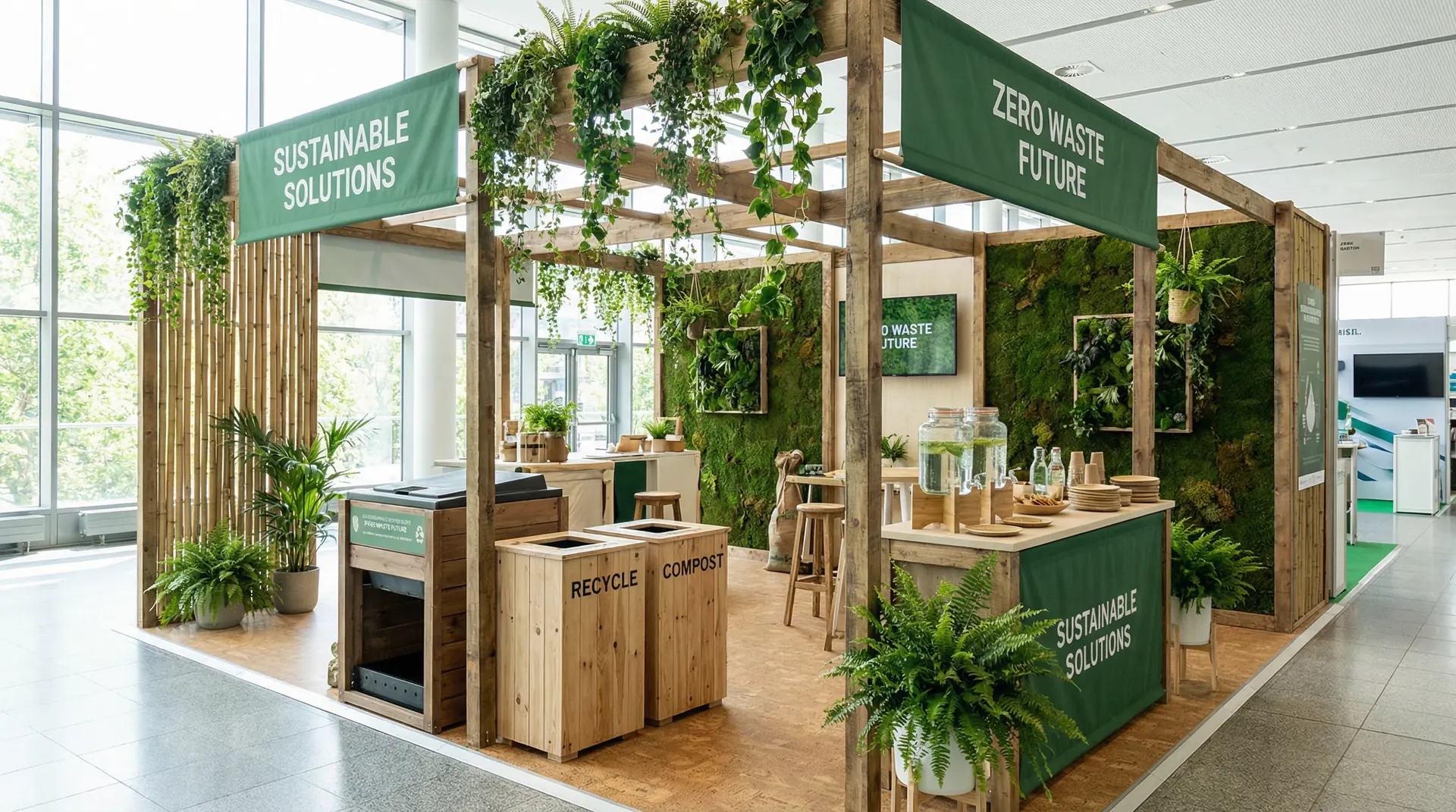
Leading sustainable exhibition stands use modular designs that can be reconfigured for multiple events, reducing the need for new construction. Materials like reclaimed wood, recycled aluminum, and sustainable fabrics replace virgin materials. This approach reduces waste while often creating more distinctive, authentic aesthetic experiences.
Energy Efficiency and Lighting
Exhibition stands consume significant energy, particularly through lighting systems. LED lighting technology reduces energy consumption by up to 80% compared to traditional lighting while providing superior visual quality.
Sustainable exhibition design incorporates natural lighting where possible, uses motion sensors to optimize lighting efficiency, and selects LED systems with minimal environmental impact. These efficiency measures reduce operational costs while demonstrating environmental commitment.
Water Conservation and Waste Reduction
Sustainable exhibitions incorporate water conservation measures and waste reduction systems. Reusable cups replace disposable ones, composting systems manage organic waste, and recycling stations encourage proper waste disposal.
More sophisticated approaches include water-efficient refreshment systems, digital materials replacing printed collateral, and waste tracking systems that measure and report environmental impact. These comprehensive approaches demonstrate genuine commitment rather than superficial gestures.
Transportation and Logistics Optimization
A significant portion of exhibition environmental impact comes from transportation and logistics. Sustainable approaches prioritize local suppliers, optimize shipping routes, and select transportation methods with lower environmental impact.
Some brands offset transportation emissions through carbon credit programs or renewable energy investments. This comprehensive approach to logistics demonstrates commitment to true environmental responsibility.
Communicating Sustainability Authentically
The most effective sustainable exhibition design communicates environmental commitment authentically. Rather than greenwashing with superficial sustainability claims, genuine sustainable design tells the story of real environmental choices and their impact.
Effective communication might include signage explaining material choices, displays showing waste reduction metrics, or interactive elements demonstrating environmental impact. This transparency builds credibility and resonates with environmentally conscious visitors.
Sustainable Hospitality Experiences
Premium sustainable exhibitions extend environmental commitment to hospitality. Organic refreshments, locally sourced products, and sustainable serving materials create hospitality experiences aligned with environmental values.
Sustainable hospitality demonstrates that environmental responsibility doesn't require sacrificing quality or luxury. Premium sustainable experiences appeal to affluent, environmentally conscious audiences.
Certification and Third-Party Validation
Third-party certifications add credibility to sustainability claims. Certifications like LEED, ISO 20121 (sustainable events), or industry-specific environmental standards provide independent validation of environmental commitment.
Displaying relevant certifications and sustainability achievements builds trust with environmentally conscious audiences and differentiates your brand from competitors making unsubstantiated claims.
Measuring and Reporting Environmental Impact
Sophisticated sustainable exhibition programs measure and report environmental impact. Metrics might include carbon footprint, waste reduction, energy consumption, and water usage.
Transparent reporting of environmental metrics demonstrates accountability and commitment to continuous improvement. This data-driven approach to sustainability appeals to corporate audiences evaluating vendor environmental responsibility.
Conclusion
Sustainable exhibition design represents the future of brand activation. By prioritizing environmental responsibility through material selection, energy efficiency, waste reduction, and authentic communication, brands build reputation, appeal to conscious consumers, and reduce environmental impact. The most successful brands recognize that sustainability isn't a constraint—it's an opportunity to differentiate, build loyalty, and create meaningful positive impact.
Keywords:
Ready to Elevate Your Exhibition Strategy?
Let our team of exhibition experts help you create memorable brand experiences that drive measurable results.